
Need to verify a candidate before you hire?
Get fast, clear employee background verification reports with digital checks in as little as 12 hours — backed by deeper investigation support when required.
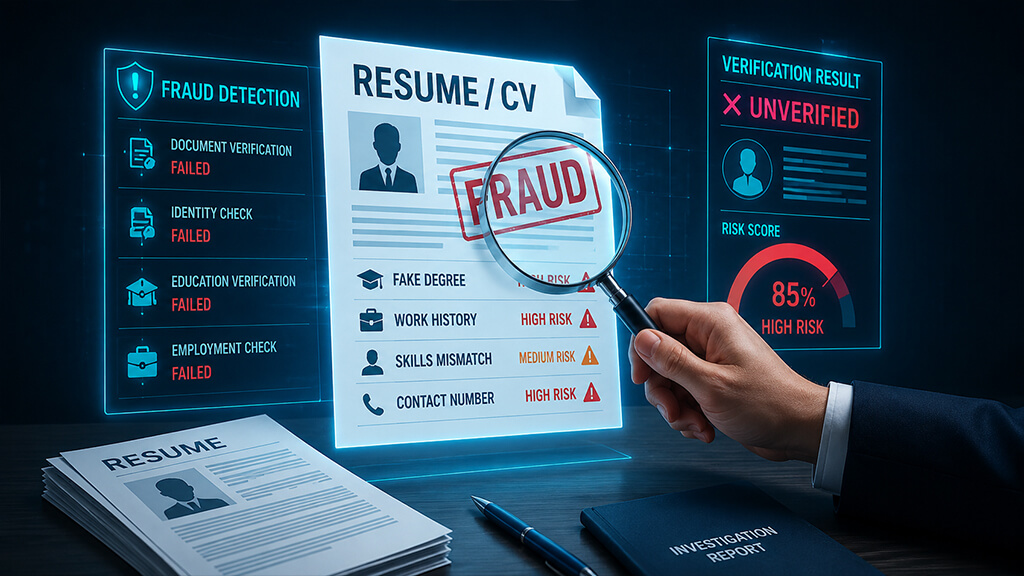
As an HR professional or a CEO helming a company, chances are that you may have come across fake IIT degrees or forged registrar signatures. According to a Nasscom Talent Survey, 56% of hiring managers have reported encountering discrepancies in hiring. These chance occurrences often lead to project delays and exorbitant rehiring cycles. Moreover, with the rapid rise of AI, deepfakes and forged documents are flooding HR hiring systems; hence, the need for reliable instant background verification.
Traditional employee background verification has taken a backseat since it still relies on scanned PDFs and phone-based verification. These processes drag hiring workflows, resulting in inefficiency. Today’s fraud ecosystem demands something more powerful and designed to destroy these gaps with the use of advanced technologies and digital background check modules.
According to VerifyStack Indian BGV Guide 2026, manual checks inherently carry a 12.4% miss rate in primary sectors such as IT and banking. Missing fraudulent profiles in high-risk areas has serious consequences in detection. Additionally, bad hires lead to productivity loss and client trust damage, which are detrimental business impacts.
Furthermore, the cost associated with hiring fraud is equivalent to or in the range of 50-150% of the annual CTC of a business. Meanwhile, hiring mistakes can cause long-term operational dysfunction and financial dysregulation.
The DPDP act of compliance requires a candidate’s explicit consent and the secure handling of data. The penalty charges for failing to comply can reach 250 crore rupees. Additionally, consent for background verification must be met separately in a way that is documented and auditable for future references. This audit trail will ensure that no mishandling of data occurs, ensuring the utmost privacy of the person under the radar.
Automated employee screening systems ascertain time-stamped audit trails for tracking and follow consent logs. This will drastically improve the accuracy of discrepancy detection and enable API-based verification records. Moreover, verification timelines can be sped up 40% faster than before.
In a nutshell, hiring fraud tools have upgraded their current stature. AI-generated documents and proxy interviews are calling for a shift away from traditional BGV. The clear path to faster and more accurate verification is automated BGV that is capable of risk mitigation, compliance, and building a safer recruitment framework for future hiring processes. If you are on the lookout for a BGV partner that can fast-track your BGV without any delay, get in touch with Millow.
Get fast, clear employee background verification reports with digital checks in as little as 12 hours — backed by deeper investigation support when required.