
Need to verify a candidate before you hire?
Get fast, clear employee background verification reports with digital checks in as little as 12 hours — backed by deeper investigation support when required.
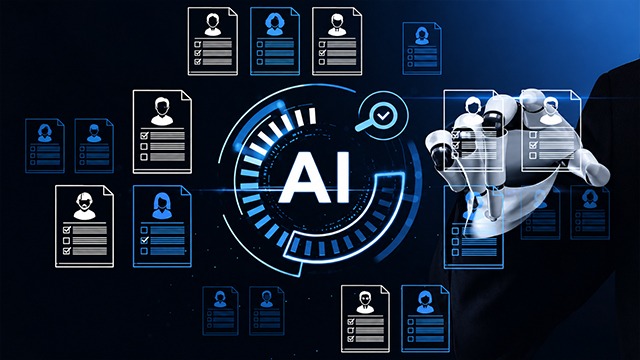
Hiring decisions move fast. Background verification has not kept up. For decades, standard employee screening meant waiting days or weeks for results. Hiring timelines stretched. Candidates dropped off. The checks meant to protect organisations became the bottleneck slowing them down.
Instant background verification changes that. Speed and accuracy are no longer a tradeoff.
Traditional background verification takes 15 to 21 days on average in India. Automated processes brought that down to 7 to 9 days. Neither is fast enough for modern hiring.
The reasons for delay follow a familiar pattern:
Each step runs sequentially in a manual process. One unresponsive employer or one missing document stalls the entire check. Over 3.6 lakh individuals had at least one check fail in the financial year 2024-25. Most of those discrepancies were caught late, after hiring decisions had already been made.
Instant background verification is not simply a faster version of the traditional process. It is a fundamentally different approach to how checks are run. Traditional verification runs checks sequentially. One step finishes before the next begins. Instant verification runs all checks simultaneously, pulling from digital databases, government records, and accreditation bodies in real time.
The result is a process that delivers results in hours rather than days. Identity checks complete in minutes. Employment and education records are validated against source databases without waiting for a third party to respond. Speed does not come at the cost of accuracy. Every check still runs against verified sources. The difference is that the process no longer depends on manual follow-ups, phone calls, or paper documents.
AI background verification replaces manual document review with automated scanning and cross-referencing. The system reads a submitted document, validates it against official records and flags inconsistencies in seconds. Document authenticity checks detect alterations, forgeries and mismatched data points that a manual review would miss. Employment records are validated against UAN and PF databases without waiting for a former employer to pick up the phone.
Risk scoring adds another layer. Every candidate receives a risk score based on the checks completed. Low risk cases clear automatically. High risk cases get flagged for human review. The system handles volume. Human reviewers handle exceptions. AI-powered verification does not eliminate human judgment. It focuses human attention exactly where it is needed.
The assumption with faster verification has always been that accuracy suffers. Automated background screening breaks that tradeoff entirely. Manual checks run sequentially and depend on third-party cooperation. AI-powered systems run all checks simultaneously against verified data sources. The process that took 7 to 15 days now completes in 24 to 48 hours.
Enterprises adopting AI-led checks report a 30% increase in fraud detection accuracy. In IT and BFSI sectors, material discrepancy rates sit between 12.4% and 13%. Manual checks were missing nearly one in every eight candidates, misrepresenting their credentials. AI catches them consistently. Speed and accuracy are not a tradeoff. They are both outcomes of the same shift from manual to automated verification.
Faster verification changes how HR teams operate at every stage of hiring. Hiring timelines shrink. A process that previously held up offers for two weeks now clears in hours. Candidates do not drop off while waiting. Positions get filled without the usual delays.
Risk exposure is reduced simultaneously. Every candidate goes through the same consistent checks. Nothing gets skipped under deadline pressure. Discrepancies surface before the offer goes out, not after the employee joins. Compliance becomes easier to demonstrate too. AI-powered verification generates structured, audit-ready reports for every check conducted. HR teams have a clear record of what was verified, when, and against which source.
The shift to automated background screening does not add complexity to the hiring process. It removes exactly the parts that were slowing it down.
Background verification in India is changing fast. The companies keeping pace are the ones treating it as a technology decision, not a compliance checkbox.
Instant background verification is no longer a competitive advantage. It is becoming the baseline expectation for any organisation that takes hiring seriously.
Manual checks are slow and inconsistent. AI background verification catches what manual checks miss, delivers results faster and keeps every hiring decision defensible.
Millow’s AI-powered verification platform delivers results in under 12 hours. Accurate checks. Audit-ready reports. Every time.
Get fast, clear employee background verification reports with digital checks in as little as 12 hours — backed by deeper investigation support when required.
Built by waywedesign
© 2026 Millow™. All Rights Reserved.